


How to choose a reliable gear motor manufacturer for industrial applications
 Oct 23, 2026|
 View:11
Industrial operations across mining, manufacturing, logistics, renewable energy and heavy processing sectors rely on consistent, high-performance power transmission systems to maintain uninterrupted production. A single underperforming geared motor can halt entire assembly lines, cause unexpected downtime, damage connected equipment, and generate thousands of dollars in unplanned maintenance costs, which makes the decision to select a qualified supplier far more than a simple procurement task. Many industrial buyers initially focus only on the lowest quoted price when sourcing these components, only to discover later that units with misaligned gears, undersized bearings or insufficient heat treatment cannot withstand their site’s actual duty cycles, turning a seemingly cost-effective purchase into the most expensive operational mistake they make that year. This is why understanding how to evaluate a trusted gear motor manufacturer has become a core competency for every industrial procurement team, engineering manager and plant operations leader. A professional gear motor manufacturer does not just supply a standard catalogue product; it delivers a precision-engineered system that protects your core motors, safeguards your driven equipment, stabilizes your production schedule and reduces long-term total cost of ownership. This guide breaks down the systematic evaluation framework every industrial buyer can follow to identify a gear motor manufacturer that fully aligns with their unique application requirements, avoids common sourcing pitfalls, and builds a long-term partnership that supports consistent, reliable site performance for years to come.
Understand your application requirements before supplier evaluation
Before you begin contacting any gear motor manufacturer, you must first map out every specific parameter of your operating scenario, as this baseline data will serve as the objective benchmark to compare every potential supplier against. Start by documenting your required output torque, exact output RPM, target gear ratio, motor power rating and full load service factor, as these core mechanical values determine whether a standard unit can handle your workload or if you will need a custom-engineered solution. Next, record details about your load type, full daily duty cycle, preferred mounting position, shaft configuration and shaft orientation, as even a small mismatch in shaft direction can make a unit completely unusable for your existing equipment layout. You must also collect data about your actual operating environment, including ambient temperature range, dust levels, moisture exposure, chemical corrosion risks, braking requirements and any VFD or control system compatibility rules that apply to your site. When you share this complete, detailed specification list with a gear motor manufacturer, you immediately filter out suppliers that only sell generic catalogue products without the engineering capability to validate their units against your real-world conditions. A professional gear motor manufacturer will never push a pre-selected standard model to you before reviewing this full application profile, and will instead ask targeted follow-up questions to clarify edge cases you may have overlooked, such as peak shock loads during equipment startup or temporary overload scenarios during peak production periods. This pre-evaluation preparation work eliminates the most common sourcing errors that happen when buyers select a gear motor manufacturer based only on power rating or price, and ensures every subsequent discussion with potential suppliers stays focused on delivering a solution that actually fits your operational needs.
Evaluate core manufacturing and quality control capabilities
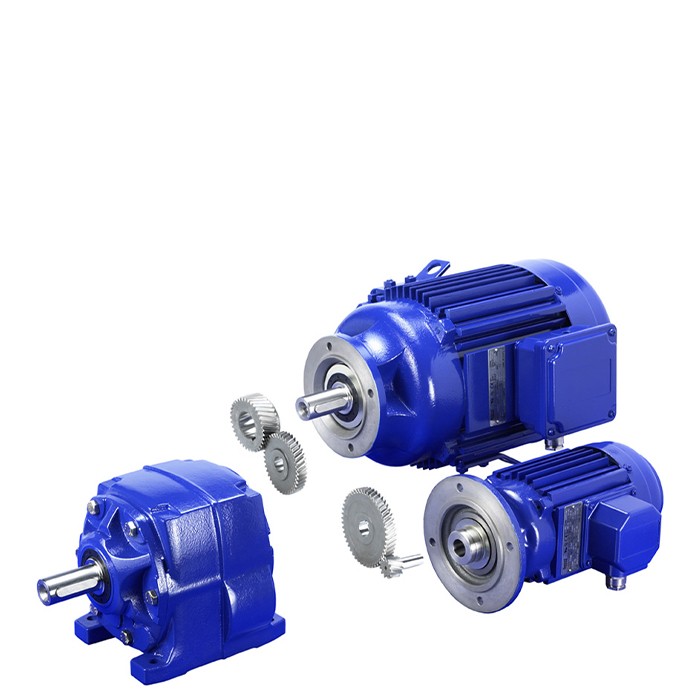
Once you have finalized your full application specification, the next critical step is to assess the actual production and quality assurance strengths of every gear motor manufacturer on your shortlist, as these factors directly determine the consistent performance of every unit you will receive. Many industrial buyers make the mistake of treating certification documents as a full proof of quality, but an ISO 9001 certificate alone does not guarantee consistent motor performance, so you must ask every gear motor manufacturer to share the full scope of their certification, the issuing audit body, their latest audit status and the exact production location covered by the certification. You should also verify that their products meet all applicable IEC 60034 safety and performance requirements for your market, and confirm that any CE marking documentation they provide covers the full gear motor assembly, not just individual components. A reliable gear motor manufacturer will be fully transparent about their full incoming material inspection process, and will show you documented procedures for testing every raw material batch, including winding material quality checks, gear hardness testing, bearing performance verification and housing dimensional accuracy validation before any production work begins. During on-site visits or virtual factory tours, ask to see their key production equipment, including CNC gear cutting machines, precision balancing stations and heat treatment facilities, as well as their full range of final testing stations. A qualified gear motor manufacturer will always run every single completed unit through a mandatory 48-hour full load running-in test before it leaves the factory, and will provide you with traceable batch records, backlash measurement data, final noise and vibration test reports and winding insulation resistance certificates for every order you place. You should also ask how the gear motor manufacturer handles acoustic testing after full gearbox assembly, as this is a critical step many low-quality suppliers skip, and small changes in assembly alignment can create unexpected vibration that leads to premature wear in high-precision applications.
Verify custom engineering and technical support capacity
For most modern industrial operations, standard off-the-shelf gear motor units cannot fully meet all unique site requirements, which makes the custom engineering capability of your selected gear motor manufacturer one of the most important long-term value drivers you will evaluate. A professional gear motor manufacturer maintains a dedicated team of experienced transmission engineers, many with 20 or more years of industry experience, who can review your specific load torque, speed, inertia, installation space and environmental conditions to create a fully customized solution instead of forcing you to adapt your equipment design to fit a standard product. This capability is especially valuable for special scenarios, including tight installation space in compact automated equipment, heavy shock loads in mining and mineral processing operations, low-noise requirements for indoor food production facilities, and special corrosion protection standards for offshore and chemical processing sites. A strong gear motor manufacturer will also provide free, professional选型 tools and digital design resources, including downloadable 3D CAD models, performance simulation software and parameter comparison sheets that allow your internal engineering team to validate fit before placing a formal order, drastically reducing the risk of costly design mismatches after installation. Beyond pre-sales support, a reliable gear motor manufacturer will maintain a global technical support network with fast response times, and will assign a dedicated technical contact to your account who can provide on-site installation guidance, troubleshooting support and routine maintenance training for your on-site operations team whenever you need it. When you evaluate this capability, ask every potential gear motor manufacturer to share two recent customer references from projects with similar application requirements to yours, and ask those references about the supplier’s response speed when unexpected issues arose, the quality of their on-site support and their willingness to adjust designs after initial product testing. This level of engineering partnership is what separates a transactional parts supplier from a long-term strategic gear motor manufacturer that will help you optimize your power transmission system performance for years, rather than just selling you a single one-time product.
Confirm after-sales service, spare parts availability and global delivery reliability
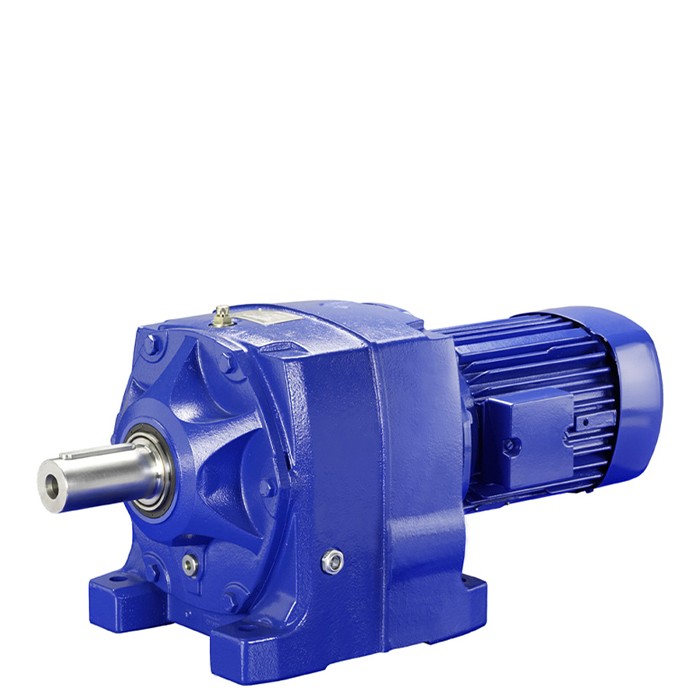
Even the highest quality gear motor will eventually require routine maintenance, replacement parts or occasional technical troubleshooting, which means the after-sales framework your chosen gear motor manufacturer provides will have a massive impact on your long-term operational uptime. A trusted gear motor manufacturer will publish clear, documented warranty terms that cover at least 12 months of full operational use, and will provide a clear, no-obscure-clause policy for handling product failures, including guaranteed response times, expedited replacement shipping options and full root cause analysis reports for any unit that fails during normal operation. You should confirm that the gear motor manufacturer maintains a regional spare parts warehouse in your market, or has established logistics partnerships that can deliver critical replacement bearings, gears, seals and winding components to your site within 24 to 72 hours in an emergency, as waiting weeks for a spare part from an overseas supplier can create catastrophic production losses for high-throughput industrial sites. For international buyers, you must verify that the gear motor manufacturer has extensive experience exporting to your region, fully understands your local market’s import compliance rules, certification requirements and customs clearance procedures, and can provide accurate lead time forecasts that account for production, quality testing and full international shipping schedules. Many buyers overlook this step and end up facing unexpected delays, unexpected customs fees or units that get held at ports because their selected gear motor manufacturer cannot provide the correct compliance documentation. A professional gear motor manufacturer will also offer extended service agreements, including scheduled on-site maintenance visits, full system performance audits and upgrade support for your existing installed gear motor fleet, which helps you extend the total operational lifespan of your power transmission system and reduce long-term total ownership costs far below what you would get from a low-price, low-service supplier.
Conclusion
Select a reliable gear motor manufacturer is one of the most impactful strategic decisions an industrial operation can make, as this choice directly shapes your production uptime, long-term maintenance costs, equipment safety and overall operational profitability for many years after the initial purchase is complete. The right gear motor manufacturer will never treat your order as a simple commodity transaction, and will instead act as a dedicated engineering partner that understands your unique application challenges, delivers precision-manufactured units that meet every one of your performance requirements, and provides consistent, responsive support from the very first选型 consultation all the way through decades of routine operation and maintenance. By taking the time to fully map out your site’s exact application requirements, thoroughly verify the gear motor manufacturer’s production and quality control processes, confirm their custom engineering capacity, and validate their after-sales support and global delivery capabilities, you will avoid the common, costly sourcing mistakes that come from selecting a supplier based only on the lowest initial quoted price. Every industrial buyer will find that investing time to identify a truly qualified gear motor manufacturer delivers far greater long-term value, protects your entire production system from unexpected downtime, and creates a stable, long-term partnership that helps your operation run more efficiently, safely and profitably year after year.
FAQ
Q: What is the difference between a gear motor and a separate motor plus standalone gearbox assembly?
A: A fully integrated gear motor, designed and manufactured as a single unified unit by a professional gear motor manufacturer, offers better alignment between the motor shaft and gearbox input shaft, lower vibration, higher transmission efficiency and a more compact footprint than a combined assembly of separate off-the-shelf components. A dedicated gear motor manufacturer also calibrates the torque matching and thermal performance of the entire system during factory testing, eliminating the risk of premature wear caused by misaligned installation that often occurs when assembling separate parts on site.
Q: Can a standard catalogue gear motor be modified to fit my non-standard installation space requirements?
A: Most professional teams from a reputable gear motor manufacturer can make targeted modifications to standard gear motor units to fit limited installation spaces, including adjusting the output shaft length, modifying the mounting flange dimensions, shortening the overall body length or adding custom interface features, without compromising the unit’s rated load capacity. When you submit your space constraint drawings to the gear motor manufacturer, their engineering team will assess the feasibility of the modification within 24 hours and provide a validated solution that maintains full operational safety.
Q: What routine maintenance work does an industrial gear motor require to maintain long-term stable performance?
A: The core routine maintenance items recommended by a professional gear motor manufacturer include checking the lubricant level and quality every 3 to 6 months, replacing lubricating grease or oil according to the specified schedule, inspecting all sealing components for signs of aging or leakage, verifying the tightness of all mounting bolts, and measuring running vibration and temperature values during regular operation. A trusted gear motor manufacturer will provide a customized maintenance manual tailored to your exact operating environment, to help you avoid unnecessary disassembly work that could damage the unit’s precision internal components.
Q: How do I confirm the gear motor manufacturer’s units can work stably with my existing VFD (variable frequency drive) system?
A: You can share the full technical parameters of your existing VFD system directly with the gear motor manufacturer, including the output frequency range, carrier frequency setting and protection logic configuration. A qualified gear motor manufacturer will verify the winding insulation grade, electromagnetic compatibility performance and bearing insulation design of their gear motor units to ensure full compatibility with your VFD system, and will provide targeted wiring suggestions to prevent issues like overheating, abnormal noise or electrical erosion that often occur when a non-specialized supplier provides mismatched components.


